This public health research and commentary is written by Dr. Alan Lockwood, SSAFE member and resident of Kendal at Oberlin in Oberlin, OH.
Heat is the leading cause of weather-related deaths in the U.S.(1) Alarmingly, CDC data show that recent heat-deaths have increased significantly as shown in the figure.(2;3) The past 11 years were the hottest recorded – 2025 ranked third with 2024 the leader.(4) An interactive NOAA map depicts the number of days when the temperature will exceed 95EF in many cities for various years.(5) The EPA predicts that hot humid states, like Florida and Louisiana, will experience escalations in heat-associated mortality while cities in Ohio and Pennsylvania, where air conditioning is not universal, will experience the greatest rise in heat-related deaths.(6) The abolition of the Endangerment Finding that links greenhouse gases to health adds to the peril.(7)
Heat-related illnesses range from mild heat rash to two serious, life-threatening conditions, heat exhaustion and heat stroke.(8) Rising body temperature and altered mentation require emergency treatment. In what is known as the “harvesting effect” heat risks are boosted by concurrent illnesses. In New York City there are approximately 580 heat deaths annually. Of these only about 7 are caused by heat stroke.(9)

Annual deaths due to heat 1999 – 2022 from USAFacts (3) and for 2023 from Howard et al.(2)
Those at the extremes of age are highly vulnerable to heat. Those 65 and older do not adapt well to heat and are more likely to succumb to the harvesting effect because of cardiovascular disease, renal disease, diabetes, asthma, physical disabilities, the need for certain medications or the presence of poor mental health including dementia.(10) Similarly, the body temperature of children rises more rapidly when they are exposed to heat when compared to adults.(11)
Compounding the heat-island effect, satellite data for 108 U.S. urban areas showed that in previously red lined areas the average summer temperature was 4.7EF higher than in green-lined areas, a difference attributed to tree cover and the built environment.(12) The Social Vulnerability Index (SVI) is a tool designed to help American communities prepare for disasters including extreme heat.(13) It is based on 15 variables measured during the census. Interactive online maps show the SVI by state, county or census tract.
A public health approach works well to study heat threats. Risk can be combated by primary and secondary preventive measures. Primary prevention depends on reducing greenhouse gas emissions. Secondary prevention depends on numerous adaptive measures. For individuals these include maintaining health, the installation of air conditioning and insulation and many others. For communities, climate action plans that include cooling shelters and regulations designed to minimize the effects of the climate emergency are critical.
Smith and his colleagues published “an architecture” for dealing with climate change.(14) Their integrated top down model posits scientific knowledge to make evidence-based decisions. But “what is happening is not normal.”(15) Broad-based, bottom-up movements by citizens are needed “to preserve, transmit and advance the glories of our way of life” as in the non-violent fight for civil rights. We must use our energy and resources to fan the sparks of democracy until, in the words of Lincoln, “the better angels of our nature” prevail.
The increasing frequency and intensity of heat waves due to climate change significantly threaten vulnerable populations, especially the elderly. Past events like the 2003 European and 1995 Chicago heat waves show the deadly impact of extreme heat, causing illnesses such as heat exhaustion and heat stroke. Models predict up to 97,000 annual premature heat-related deaths in the U.S. by the late 21st century if high greenhouse gas emissions continue. Social vulnerabilities, particularly in historically redlined urban areas, exacerbate risks for marginalized communities. Addressing this crisis requires both policy changes to reduce emissions and community efforts to improve resilience and protect vulnerable individuals from extreme heat.
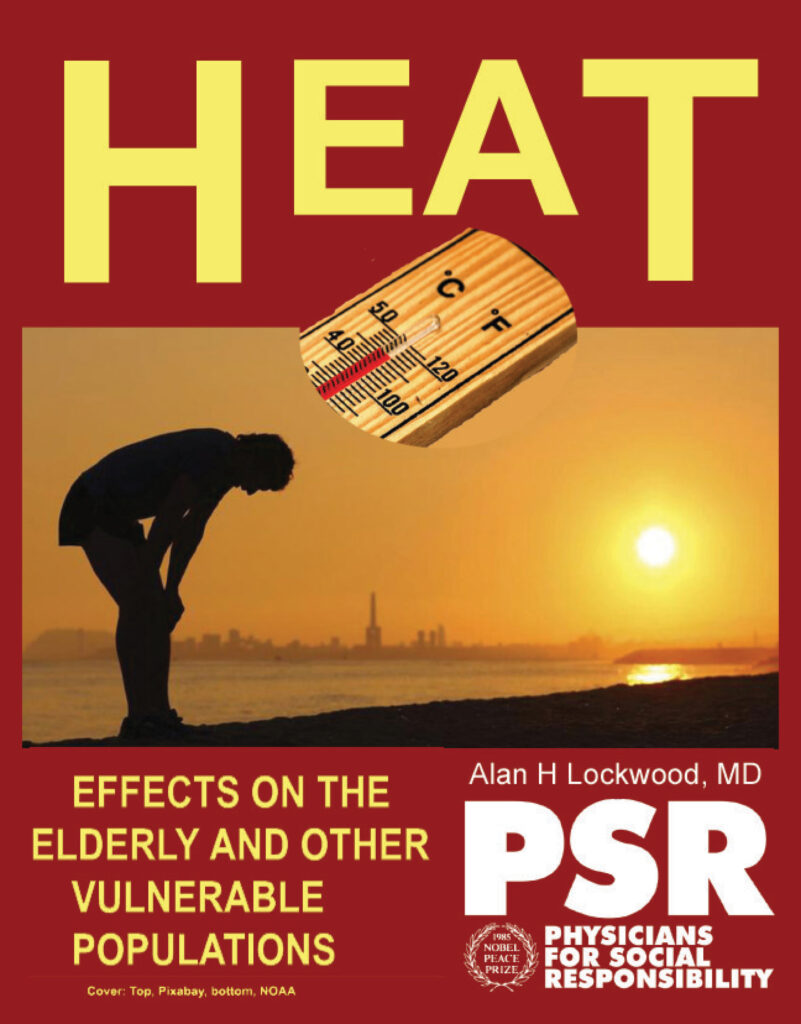
Dr. Alan Lockwood, resident at Kendal at Oberlin, as been generous enough to share a 9-page pamphlet he has written on this topic titled, “Heat: Effects on the Elderly and Other Vulnerable Populations” for Physicians for Social Responsibility.
Reference List
(1) National Weather Service. Weather Related Fatality and Injury Statistics. 2024. (2) Howard JT, Androne N, Alcover KC, Santos-Lozada AR. Trends of heat-related deaths in the US, 1999-2023. JAMA 2024; 332(14):1203-1204. (3) USAFacts Team. How many people die from extreme heat in the US? 2025. (4) World Meteorological Organization. WMO confirms 2025 was one of warmest years on record. 1-26-2026. (5) National Oceanographic and Atmospheric Administration. NOAA Future Heat Events. 2026. (6) EPA. Climate Change and Social Vulnerability in the United States: A Focus on Six Impacts. U.S. Environmental Protection Agency, EPA 430-R-21-003. 2021. (7) United States Environmental Protection Agency. Endangerment and Cause or Contribute Findings for Greenhouse Gases Under Section 202(a) of the Clean Air Act. 12-7-2009. (8) Sorensen C, Hess J. Treatment and prevention of heat-related illness. New Engl J Med 2022; 387(15):1404-1413. (9) New York City Department of Health. 2024 NYC Heat-Related Mortality Report. 4-2-2025. (10) Centers for Disease Control and Prevention. Heat and Older Adults (Aged 65+). 6-25-2024. (11) Tsuzuki-Hayakawa K, Tochihara Y, Ohnaka T. Thermoregulation during heat exposure of young children compared to their mothers. European journal of applied physiology and occupational physiology 1995; 72(1):12-17. (12) Hoffman JS, Shandas V, Pendleton N. The Effects of Historical Housing Policies on Resident Exposure to Intra-Urban Heat: A Study of 108 US Urban Areas. Climate 2020; 8(1):12. (13) The Agency for Toxic Substances and Disease Registry A. Social Vulnerability Index. 2024. (14) Smith JB, Vogel JM, Cromwell III JE. An Architecture for Government Action on Adaptation to Climate Change. An Editorial Comment. Climatic Change 2009; 95(1-2):53-61. (15) Brooks D. What’s Happening Is Not Normal. America Needs An Uprising That Is Not Normal. The New York Times 2025 Apr 17.